
The Periodic Table of Arguments (PTA) builds on the traditions of logic, dialectic, and rhetoric by integrating their insights into a coherent and systematic framework. Arguments, fallacies, and other means of persuasion are all structured as a triad that minimally consists of a conclusion, a premise, and a lever (see Figure 1).
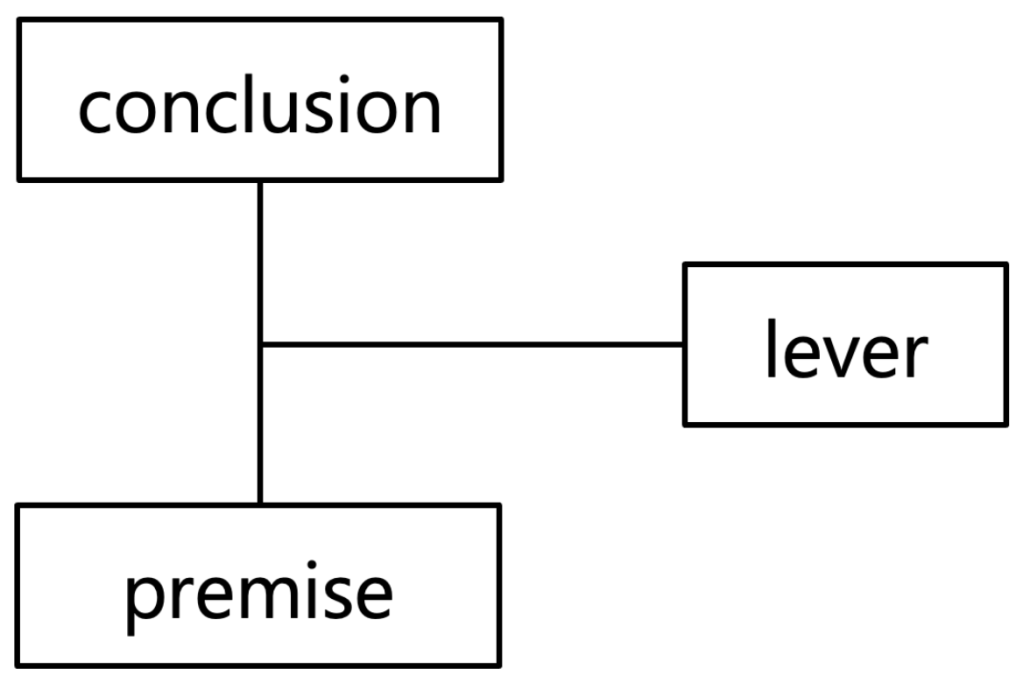
Figure 1. The PTA conceptualization of an individual argument
Each of these three elements is treated as a statement, consisting of a subject and a predicate. This provides a common analytical vocabulary that applies across different instantiations of arguments. Moreover, the structure of this individual argument is fully recursive. This means that each of the three elements can be further supported, allowing for the introduction of additional premises and associated levers expressing the connection between the premise and the supported statement, which now functions as a conclusion (see Figure 2, which shows the original triadic argument structure in blue).
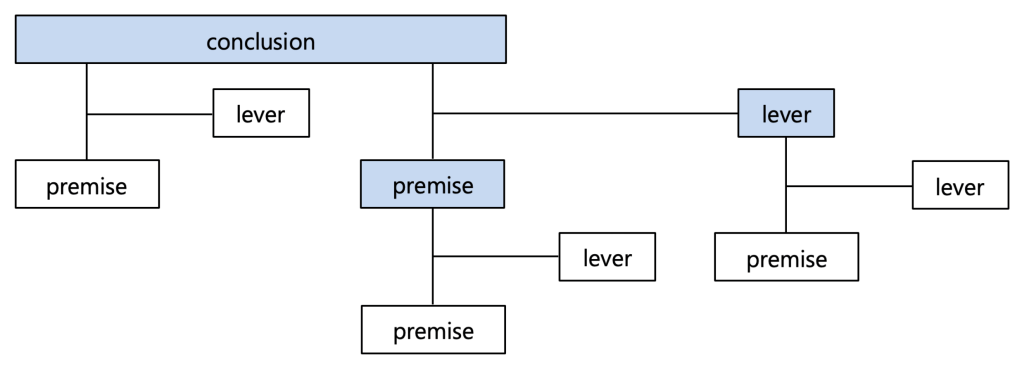
Figure 2. The recursivity of the PTA conceptualization
The conceptual innovation of the PTA framework lies in its ‘parametric’ approach to argument categorization. It describes an argument type as a unique combination of the values of three parameters that reflect their fundamental characteristics: form, substance, and lever. Unlike traditional classification systems, which often lack a theoretical rationale, this parametric approach provides a systematic and internally coherent method for distinguishing arguments. Arguments are classified as belonging to the same type when they share identical values for these three parameters, while a difference in at least one value places them in separate types.
The PTA framework is made operational through the Argument Type Identification Procedure (ATIP) (Wagemans, 2025), a step-by-step method that guides the analyst in identifying the type of any given argument by systematically determining the values of the three parameters.
By following the links, you can learn more about the basic terminology of the PTA and the parameters argument form, argument substance, and argument lever. For more information and free downloads of key publications on the PTA, please see the sidebar or the list below.
Bibliography PTA
Wagemans, J.H.M. (2025). Periodic Table of Arguments 3.0. Published online August 8, 2025 >>> DOWNLOAD
Wagemans, J.H.M. (2025). Argument Type Identification Procedure (ATIP) – Version 5. Published online March 25, 2025 >>> DOWNLOAD
Wagemans, J.H.M. (2023). How to identify an argument type? On the hermeneutics of argumentative discourse. Journal of Pragmatics, 203, 117-129 >>> DOWNLOAD
Wagemans, J.H.M. (2020). Why missing premises can be missed: Evaluating arguments by determining their lever. In J. Cook (Ed.), Proceedings of OSSA 12: Evidence, Persuasion & Diversity. Windsor, ON: OSSA Conference Archive >>> DOWNLOAD
Wagemans, J.H.M. (2019). Four basic argument forms. Research in Language, 17(1), 57-69 >>> DOWNLOAD
Wagemans, J.H.M. (2018). Analogy, similarity, and the Periodic Table of Arguments. Studies in Logic, Grammar and Rhetoric, 55 (68), 63-75 >>> DOWNLOAD
Wagemans, J.H.M. (2018). Assertoric syllogistic and the Periodic Table of Arguments. In S. Oswald & D. Maillat (Eds.), Argumentation and Inference: Proceedings of the 2nd European Conference on Argumentation, Fribourg 2017. (Volume I, pp. 573-588). London: College Publications >>> DOWNLOAD
Wagemans, J.H.M. (2016). Reply to commentary on Constructing a Periodic Table of Arguments. In P. Bondy & L. Benacquista (Eds.), Argumentation, Objectivity, and Bias: Proceedings of the 11th International Conference of the Ontario Society for the Study of Argumentation (OSSA), 18-21 May 2016 (pp. 1-4). Windsor, ON: OSSA >>> DOWNLOAD
Wagemans, J.H.M. (2016). Constructing a Periodic Table of Arguments. In P. Bondy & L. Benacquista (Eds.), Argumentation, Objectivity, and Bias: Proceedings of the 11th International Conference of the Ontario Society for the Study of Argumentation (OSSA), 18-21 May 2016 (pp. 1-12). Windsor, ON: OSSA >>> DOWNLOAD
 PERIODIC TABLE OF ARGUMENTS