
This song is awesome because it’s catchy.
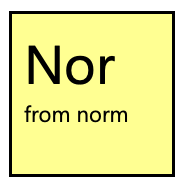
The subjects of the conclusion and the premise are the same and the predicates are different, so the argument form is alpha (a is X because a is Y): “This song (a) is awesome (X) because it (a) is catchy (Y).”
Both the conclusion and the premise can be classified as statements of value (V), so the argument substance is VV: “This song is great (V) because it’s catchy (V)”.
The keyword NORM describes the relationship between predicates Y and X. The argument lever can thus be formulated as “Being catchy (Y) is a NORM for being awesome (X)”.
Other examples
- Abandoning a friend in need is wrong because it is heartless.
- Raising taxes on the poor is unjust because it is exploitative.
Notes
One could argue that this argument type is a variant of the argument from criterion as the lever can also be formulated with the keyword CRITERION. This would mean that there are two arguments from criterion, one with a statement of fact (F) and another with a statement of value (V) as its premise.
 PERIODIC TABLE OF ARGUMENTS